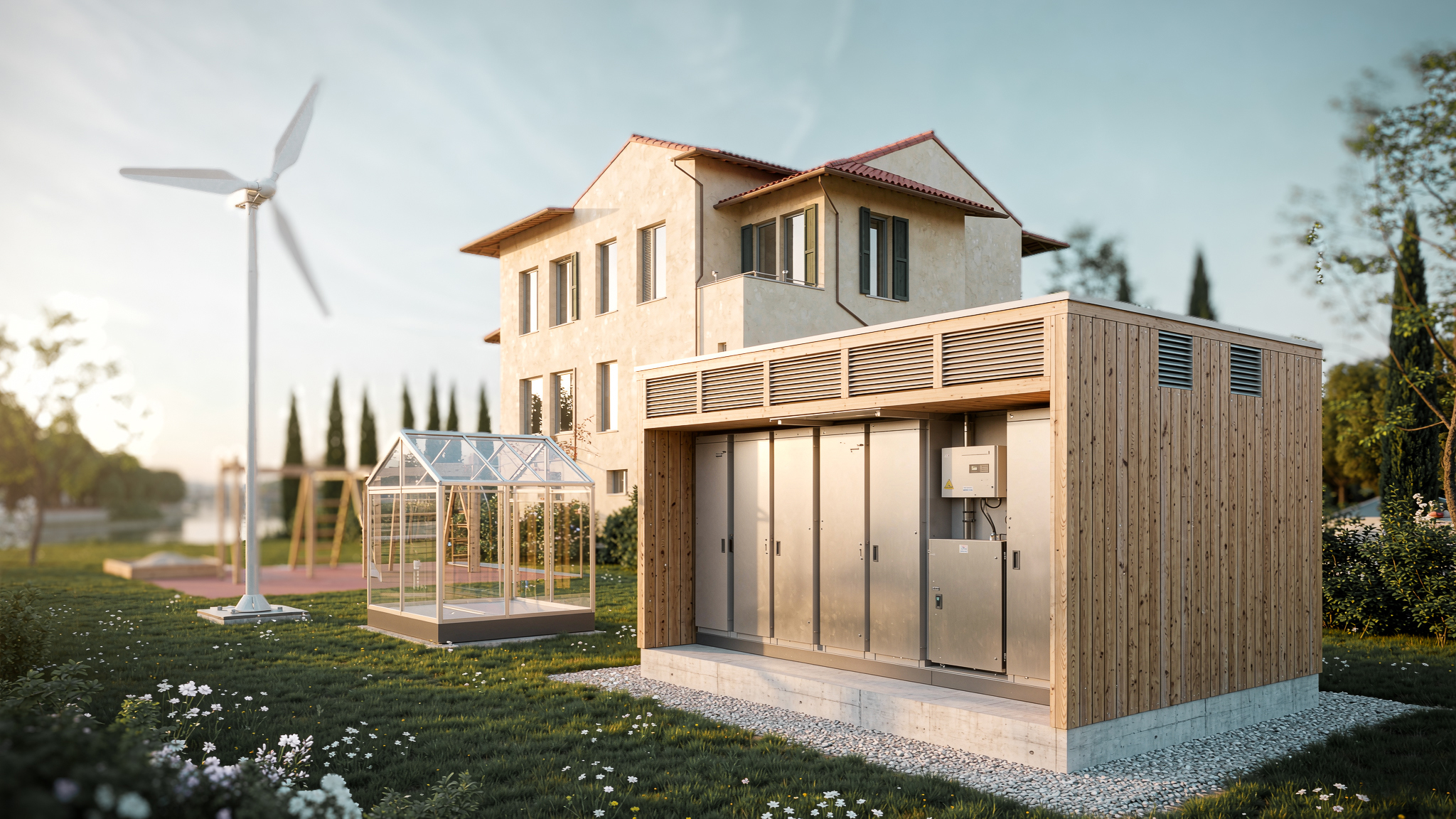
The amount of sunlight in the site is limited, especially during the afternoon. As the area is usually unevenly heated, wind can be a suitable choice for providing clean energy. For this project, the most appropriate powering strategy is the distributed wind powering. It suits the small-scale use in the playground that I designed and the residential use in the greenhouse and building. The wind power suits the particular climate in Florence, which has the wind speed ranging from 12 - 19 km/h most of the time. Among the different wind turbines, the most energy-efficient and appropriate is the single small turbine. It can partially offset loads or support a completely-off grid home. To support the distributed wind system, the salt water battery can be both appropriate and efficient, employing a concentrated saline solution as its electrolyte. They are nonflammable and more easily recycled than batteries that employ toxic or flammable materials.
Reference:
“Advantages and Disadvantages of Wind Energy – Clean Energy Ideas”. Clean Energy Ideas. 19 June 2013. Retrieved 10 May 2017.
“Residential Wind Energy Systems – Bergey Wind Power Bergey Wind Power”. bergey.com. Retrieved 10 May 2017.
“About Wind Energy: Factsheets and Statistics”. www.pawindenergynow.org. Retrieved 10 May 2017.
Hussein, A.K. (2015). “Applications of nanotechnology in renewable energies—A comprehensive overview and understanding”. Renewable and Sustainable Energy Reviews. 42: 460–476. doi:10.1016/j.rser.2014.10.027.